
Is Labubu Delulu?: The $1.8 Billion Business Behind the Mascot of Overconsumption
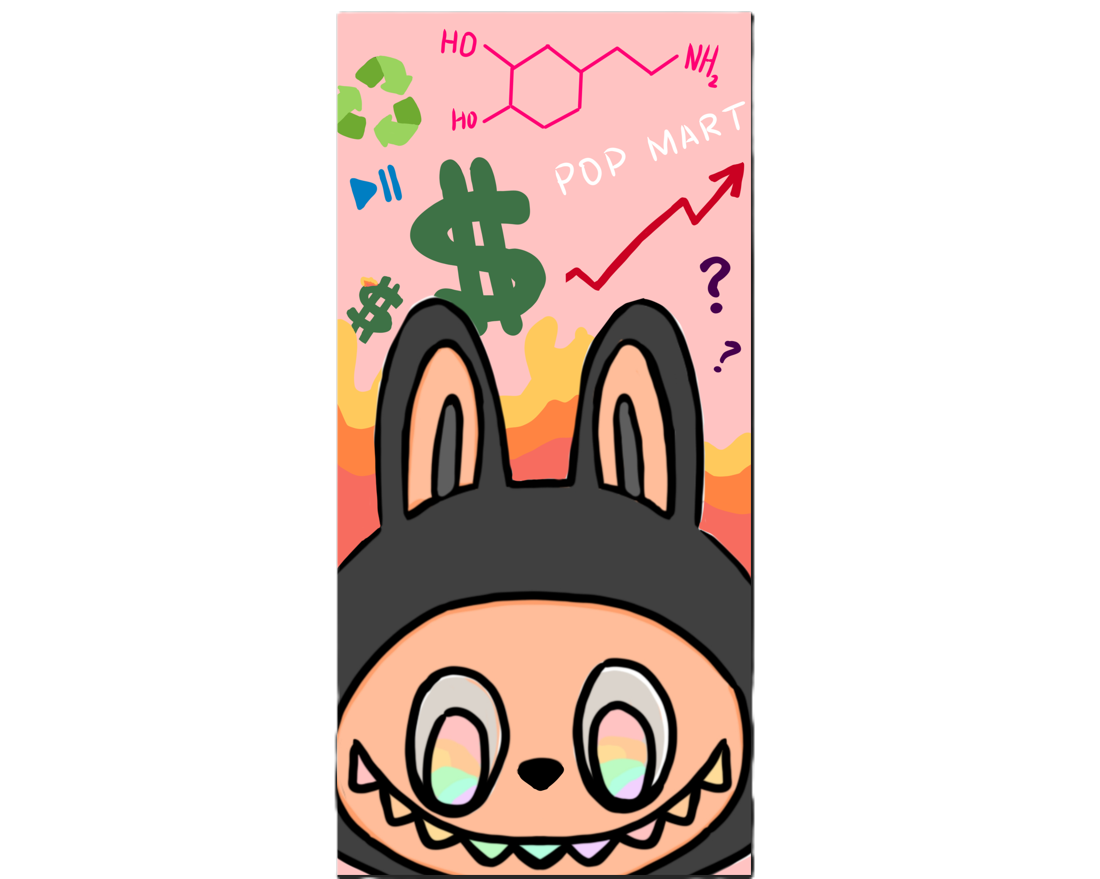
Drawing of Labubu by Maia Maganito
“I keep getting the wrong Labubu color!” Natalie Reynolds, a social media personality, shrieks at the camera as she sobs and weeps uncontrollably. Cardboard boxes and plastic containers scatter in heaps on the floor surrounding her thrashing figure, her mascara dribbling down her face. The brown plush she is furiously ripping apart, biting, and cutting, is a collectible accessory called a Labubu.
Apart from Katseye, Sydney Sweeney’s bathwater, and “6-7,” this small grinning monster has haunted FYPs for the past few months. As the company in charge of its production continues to see record-high sales and popularity rocket internationally, Labubu has wormed its way into almost every shop and consciousness.
This trend owes its success to a Chinese company named Pop Mart, created in 2010 by CEO Wang Ning. Beginning as a retail business with humble origins and a brand idea, Pop Mart started establishing itself with multiple locations nationwide. After seizing the opportunity to collaborate with artist Kenny Wong to create a new character, Molly, Ning decided to take the step to transform Pop Mart into a collectible empire, leading to a soar in sales.
Meanwhile, in 2015, a Taiwanese artist named Kasing Lung released a children’s trilogy called The Monsters. The books featured small creatures with devious smiles defined by sharp, triangular teeth, whose compassionate nature sometimes led to harmless trouble. Based on Nordic mythology, the most well-known characters were named Labubu, a fuzzy girl monster, and her skeleton boyfriend, Tycoco. Lung collaborated years later with the booming and popular Pop Mart, which chose to focus their efforts on Labubu.
Though the initial release in 2019 sparked interest in consumers as Pop Mart opened U.S. locations, Labubu did not become an international phenomenon until her debut with Lisa, a member of the K-pop girl group Blackpink, in 2024.
Since Blackpink had a huge fan base who idolized Lisa and wanted to copy her every move, the additional exposure to the Blinks (the name for Blackpink fans) created a massive surge in the purchase of Labubus. From the same K-pop group, Rosé followed suit, along with celebrities worldwide, including Rihanna and Kim Kardashian; even athletes like Naomi Osaka began to bring custom crystal-embossed Labubus to their tennis tournaments.
Consumers were more than willing to spend thousands of dollars on plastic to be like their celebrity idols. Posts of overjoyed fans littered social media. But how many Labubus become too much?
The popularity of the product began to look more like a curse than a blessing. Videos of abuse of the collectibles and over-decoration with them began to circulate as Labubu started to look more like a joke. To make matters worse, the little monster merged into the category of brainrot (addictive short-form content with no intellectual value), taking her place next to the trends with deteriorating reputation, like Dubai chocolate.
These small toy accessories that started as respectable collectible items created a domino effect to become another mascot of overconsumption. Inevitably, like the Cabbage Patch Kids of the '80s, the gremlins’ downfall means plastic shells of bodies will proliferate in landfills. However, the amount of waste produced after the end of the craze is not the only issue posing chaos to our environment. A closer look at the dolls’ materials will show the health risks involved in their production and disposal.
According to the Pop Mart website, Labubu and her friends are made up of 3 main materials: PVC, ABS, and polyester. PVC, also known as polyvinyl chloride, contaminates ecosystems worldwide and poses threats to human health as a microplastic. Popular due to its low price and durability, PVC can cause cancer, hormone disruptions, and other critical issues in the body. ABS, or acrylonitrile butadiene styrene, is non-biodegradable and releases toxins when burned. Additionally, the creation of polyester and these types of plastics uses hundreds of tons of water and greenhouse gases annually, not to mention the waste amassed from the packaging.
Labubus have negative impacts on mental health as well. The anticipation underlying the blind box experience has been scientifically proven to give consumers dopamine hits similar to gambling. The National Institutes of Health (NIH) has conducted studies that connect excessive participation in blind box products to increases in mental health issues such as drug use, anxiety, depression, and even suicidal risks. Consumers participating in mystery boxes continue to chase the high of getting the product type they want, while marketers are continuously studying their behavior to capitalize on buyers’ vulnerability.
Cash Shonkwiler, a social media consumer, GHS Senior, and paraprofessional at Meadowlark Elementary School, has seen this effect with her students in person. “The Labubus are kind of a status symbol… If [a student] has one, [they’re] the top dog,” she says, “There definitely is FOMO around them; there’s a lot of kids wanting to get Labubus, but they can't because they don’t have a source of income.” This cult-like following is even influencing the younger members of our community.
With all of these factors in mind, Labubu represents a temporary fix to bigger issues in our society. She is proof that consumers would rather spend money on pieces of plastic than address their personal problems and face the real world. Instead of focusing on materialism to escape FOMO, take a moment to step back into the reality of the environmental, personal, and societal issues our world faces today. As a wise man once sang, “If you wanna make the world a better place, take a look at yourself and then make a change.” The next time you want a Labubu, remember that your time and money are better spent contributing to the community through GHS student groups, such as the Environmental Club and Key Club.
