
“A Better World”: Fulbright TEA Teachers Visit Bozeman

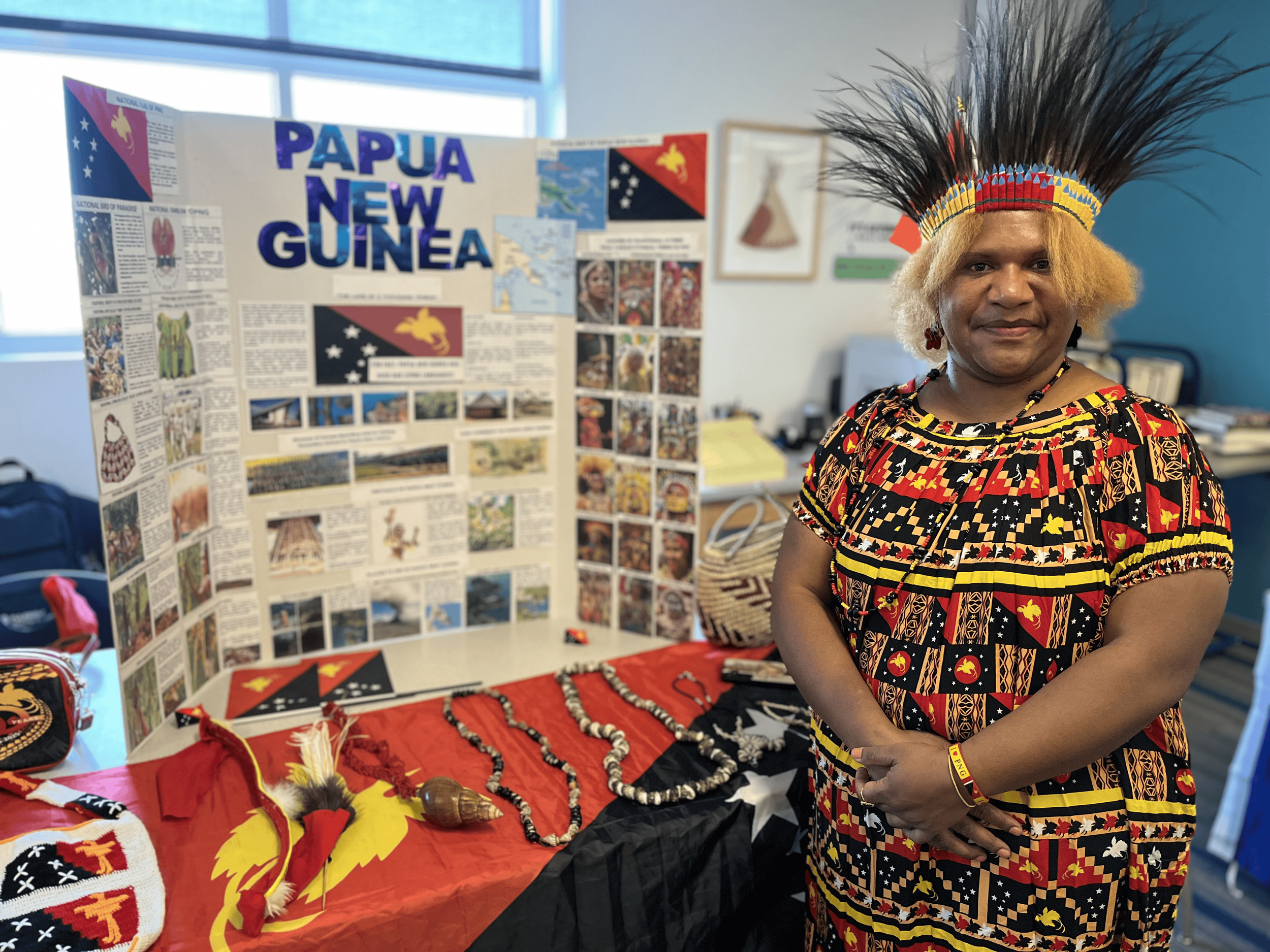
Papua New Guinea’s Lorraine Afika in traditional clothing. Photo by Ezra Graham.
Scrawled in anticipation, posters in foreign languages could be seen on Gallatin High School’s walls in October. The signs were made to welcome 22 recipients of the Fulbright Teaching Excellence and Achievement (TEA) award from 19 countries to the Raptor community. The delegation observed classes, educated students about their cultures, and honed their English skills while in Bozeman.
Over a six-week stay, hosted by Montana State University, the delegation visited the Museum of the Rockies and Yellowstone National Park.
In early October, Raptor Report sat down with three TEA English teachers to discuss the purpose of international exchange in education. Miguel Soares, of Timor-Leste, has been teaching for over 15 years, Jesús Armando Argueta Ramos of El Salvador for over a decade, and Dinh Thi Lam Tra of Vietnam for 23 years.
The educators described their entrance into the profession as a bid to help improve the lives of their country’s youth. Dinh linked a stronger education system to a stronger Vietnam. Additionally, Soares mentioned, “Our country recently got its independence 23 years ago,” and described the importance of education as a tool to equip students in Timor-Leste for a novel and self-determined future.
“There's a huge difference between our schools and Bozeman’s high school. As I walked through the halls, I could see many areas that we don't have,” said Armando, who was particularly impressed with the large variety of clubs Gallatin’s students curate. “When I saw these high schools, it's like a university for my country.”
GHS’s strong career technical education courses were noticed by Dinh Thi Lam Tra, who visited a culinary class and was drawn to the different lessons learned in the kitchen. While traditional cooking techniques are taught, students are also required to clean their work stations.
In Tra’s Vietnamese school, students are required to wear uniforms–both teachers and students have uniforms in Timor-Leste as well. In contrast, when the Fulbright teachers visited Gallatin High School, many were adorned in spirited costumes that matched Homecoming spirit week themes. This zany tradition was countered, however, by more formal traditions of American high school, including the pledge of allegiance. “They showed their gratitude to the national flag,” said the educator, who says that Vietnamese students observe similar customs weekly. “The two schools tell us about patriotism.”
In Gallatin High School’s various encounters with the outside world, foreign visitors, like Okinawan students profiled in March, often use the word “freedom” to describe the American education system. For Miguel Soares, observing government teacher Joshua Rassi lead students outside on a brief walk exemplified this theme; after 15 minutes of rejuvenation, the students Soares observed were more likely to engage in the lesson.
Soares also saw students learning about Native American history, a mandated topic by state law. The Timorese viewed Native American education as important and appreciated the way the GHS teacher expected students to interact in small groups. “When I am back home, I want to apply this kind of style…in my classroom,” said Soares.
Through Gallatin’s Spanish 4 classes, students are currently speaking with students in Oaxaca, Mexico, over several Zoom calls, which Armando observed during his visit. The native Spanish speaker was appreciative of such efforts to learn Spanish and helped American students with translation.
Educators also found hints of home in Bozeman. “It's likely the world is too small,” reflected English teacher Dinh, who encountered a Vietnamese woman at Montana State University: “I and her share several friends in Vietnam.” While Dinh had not met any Vietnamese students at Gallatin before the interview, she connected with multiple students fluent in the language at the cultural fair, an end-of-week exposition of the teachers’ native countries.
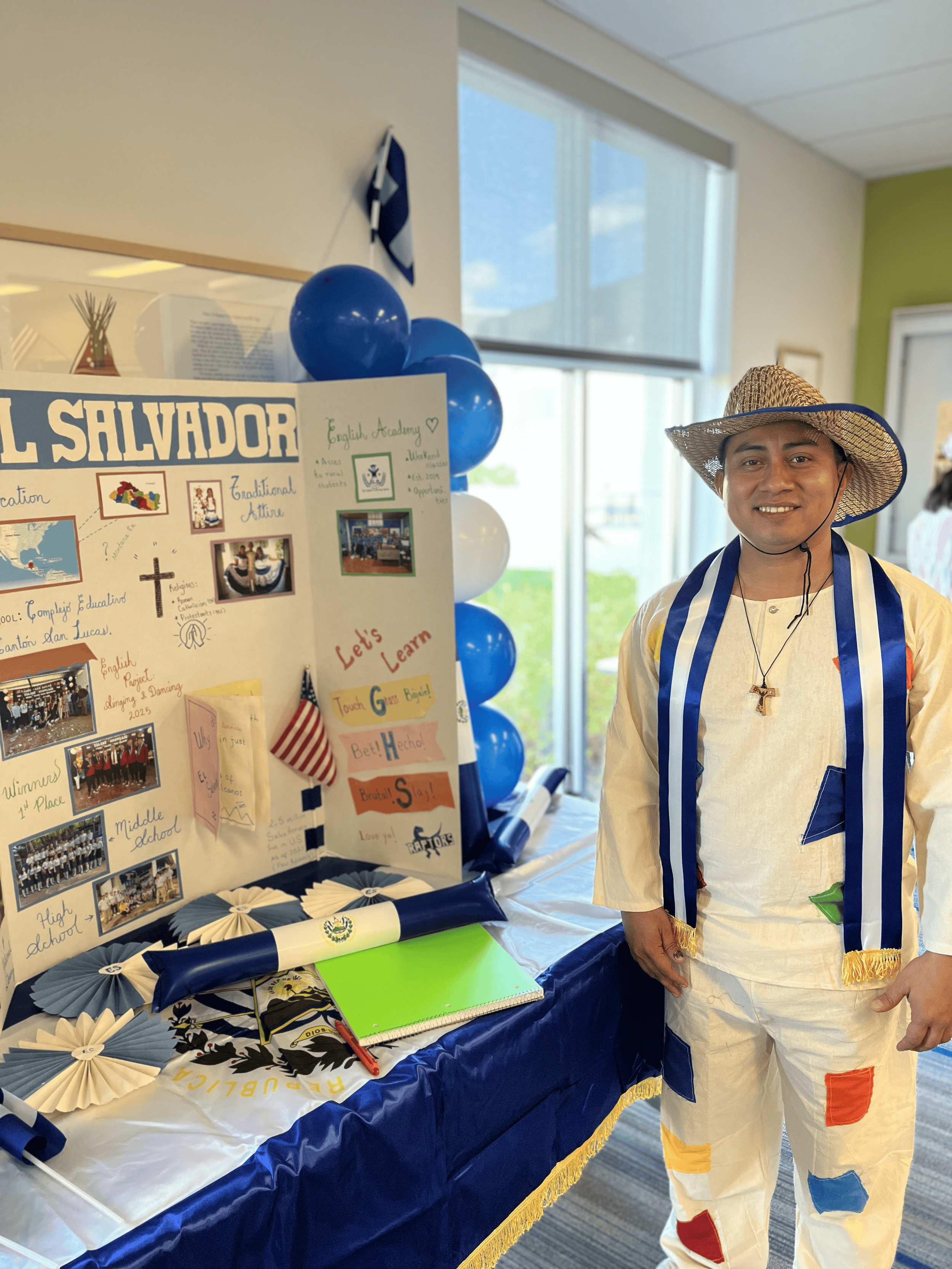
El Salvador’s Jesús Armando Argueta Ramos. Photo by Ezra Graham.
The cultural fair, which spanned Gallatin’s two-floor library, was a colorful event, with many TEA scholars dressed in traditional clothing. Standing next to tri-fold displays detailing the customs of their countries, throngs of students eager to snatch time away from the classroom were rapt by stories from thousands of miles away.
Lorraine Afika of Papua New Guinea presented about the indigenous groups of the island nation and its more than 840 living languages. Others brought traditional foods or flags to give to students. Armando had translated several slang terms into Spanish, which he wrote on his tri-fold–‘bet’ became hecho, for example. The Salvadoran also wrote “love ya!” in the bottom right of his presentation, with a GHS Raptor logo close by.
The TEA exchange has had profound impacts on the foreign teachers’ mindsets. Argueta Ramos says that creating a bridge between cultures creates bonds. “In that way, we are more human. We understand what is going on in other areas, and that way we can be more empathetic with other people,” he said. According to Dinh, “If someone can see [another’s] vision and their responsibility to work with that vision, I think that we can make a better world.”
The audio of Raptor Report’s full roundtable discussion with Dinh Thi Lam Tra, Miguel Soares, and Jesús Armando Argueta Ramos will be published online as part of our new project, Raptor Radio.
