
The Prospect of Solar Panels at Gallatin High
By Audrey Woessner and Elsa Nave
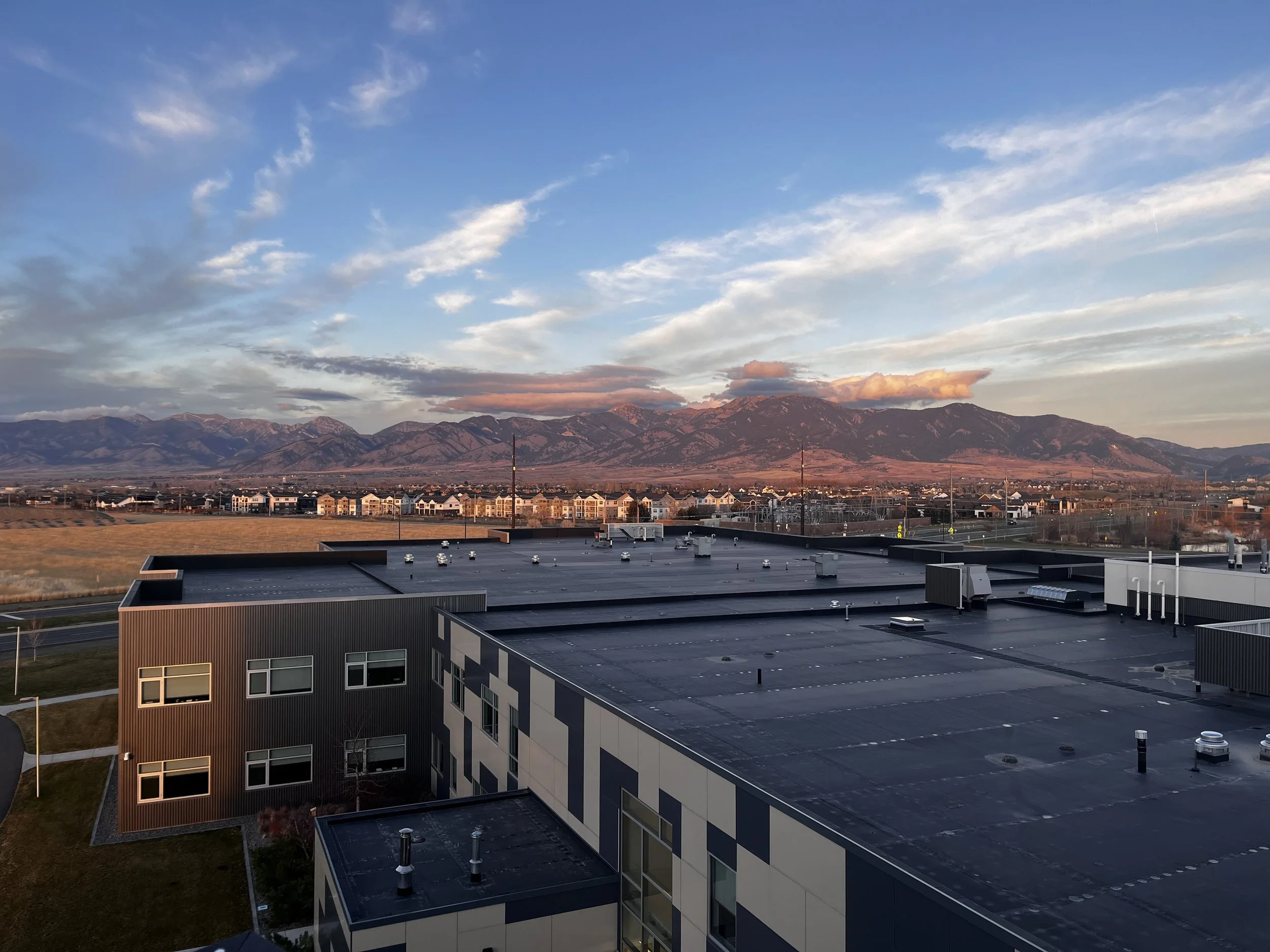
Gallatin High School’s flat roof. Photo by Ezra Graham.
Students at Gallatin High are taking a close look at the prospect of solar panels being added to the high school. The effort follows the successful fundraising campaign from Bozeman’s Solar Club, which helped finance solar panel installations at Hyalite Elementary, Meadowlark Elementary, and Sacajawea Middle School.
Solar Panels are a way to take our sun’s natural processing and harness this energy into every day electricity. Natural materials such as sand, aluminium, and copper are combined with manmade components to form the components needed for solar panels.
According to the U.S. Energy Information Administration, more than 20 million barrels of oil are burned across the nation per day. This alarming statistic is a reflection of the pollution spewing into Earth’s atmosphere, resulting in global warming. To combat this issue, solar panels provide a clean way to produce electricity and reduce the amount of fossil fuels released into the environment. Installing solar panels at Gallatin High School is one method to mitigate our Earth’s rapid process of climate change.
Gallatin’s Environmental Club members say the school itself is designed with the ability to have solar panels installed. The building’s flat roof and reinforced support posts were included in its original construction.
Treasurer of Gallatin High’s Environmental Club Sam Story states,“Gallatin was built with solar panels in mind…We basically have everything we need except for the actual panels.”
But why does roof design matter? Solar panels generate the most energy when angled toward direct sunlight, but the sun moves. The flat roof allows for the school to position the panels to the most optimal place to absorb the most sunlight, and even during Montana’s long winters, snow can help reflect additional sunlight onto the panels, increasing the total amount of energy they can absorb.
Logistically, the biggest barrier to solar panels is the price tag. The estimated price for a full installation to Gallatin High sits at upwards of $90,000. While interviewing students, opinions varied. Sophomore Wiley Daniels expressed skepticism. He mentioned the enormous cost for solar panels, declaring it to be too much for the district to afford and that money could be better spent elsewhere. However, there were other students who disagreed. Freshman Aubree Brewer countered this claim by asserting, “solar panels are a beneficial way to help the environment, and it could cut back costs on the electricity bill of the school so we could use that money for equipment for electives and classes.” In a survey of 24 students who were asked the question “should solar panels be added to our school?” 16 out of 24 agreed and supported pursuing solar energy for the school.
Interest in renewable energy continues to grow among students who push to see long term environmental and financial benefits from solar panels. With nearby schools already making a transition, many Gallatin students hope that their school will be the next to join the move towards clean and renewable energy.
