
Polarization: The Increasing Tolerance for Censorship and Political Violence
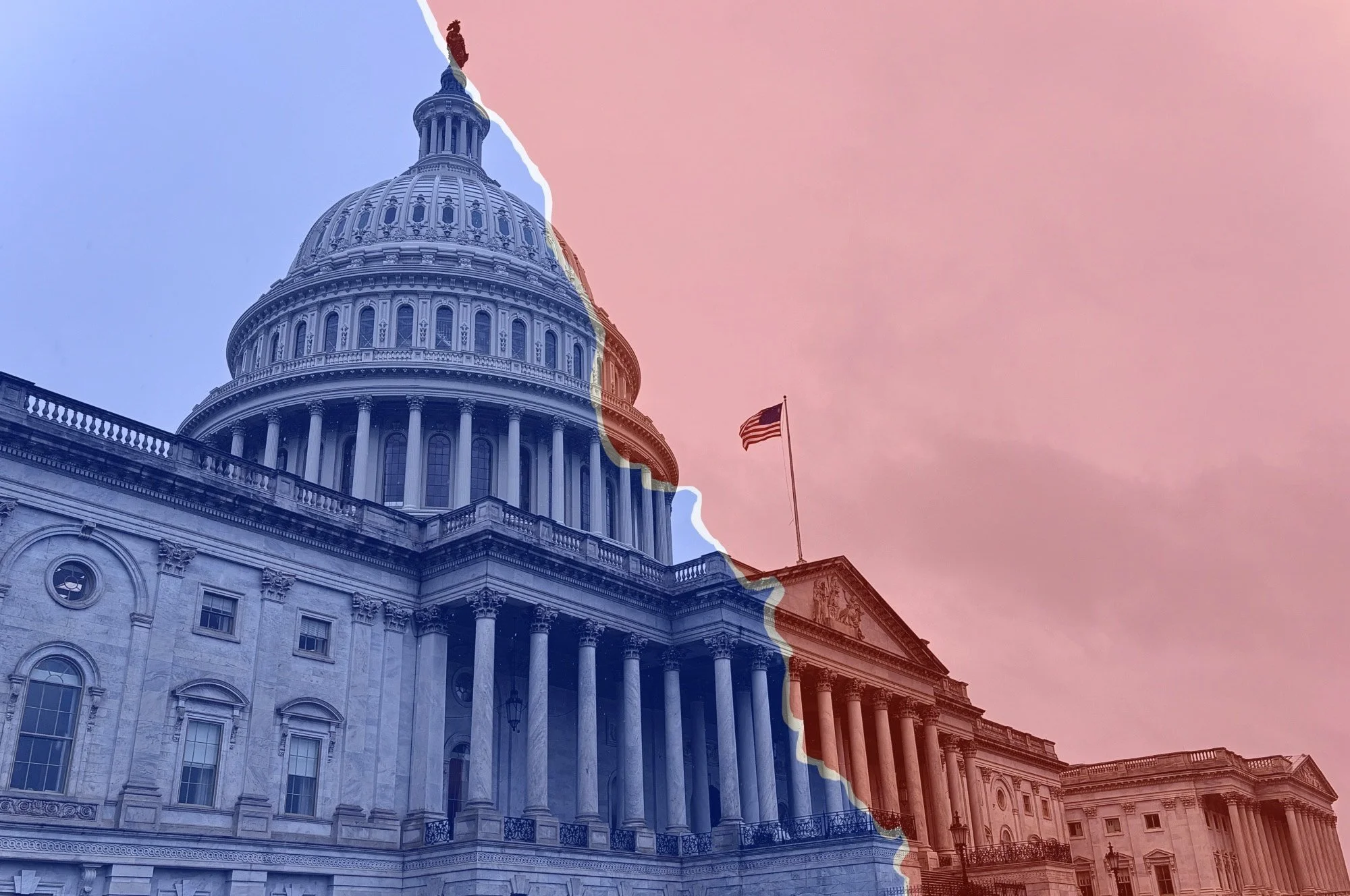
Photo illustration by Cole Swallow.
In recent years, the United States has appeared to be an exceedingly polarized nation, with elected officials and constituents alike in a constant discussion to find a course of action. Political officials in both parties have claimed censorship, incitement of violence, and extremism by the other party.
Media and news articles also push this rhetoric, seemingly dividing this country even further. A survey conducted by NPR shows that two-thirds of Americans have been increasingly anxious about politically-motivated violence against both protestors and officials; however, the actual increase of political violence feels insignificant compared to the overall concern. After all, there have been 23 politically-charged murders this year, which is only 5 more instances than in 2023.
Adam Goldstein, the Vice President of Strategic Initiatives at the Foundation for Individual Rights and Expression (FIRE), often reflects on the political discord throughout the nation, due to its direct effect on his career and position.
“While we may not have seen a dramatic spike in political violence yet, surveys have also shown that people are more tolerant of [it],” Goldstein said. “More people are willing to say that political violence is sometimes acceptable.”
A startlingly large number of people have adopted the disturbing mindset that this form of violence can be necessary. According to a recent survey from PBS, nearly a third of Americans think that violence of this kind is sometimes justified, which was a significant increase from 19% just 18 months before. “The funny thing is they’ll rationalize…‘It’s almost never acceptable to engage in political [violence], but sometimes you have to.’ Never means never. It’s actually not that complicated,” Goldstein expressed, before chuckling dryly.
Though political violence is a byproduct of polarization, the two aren’t as connected as they may seem. “There is a link between polarization and political violence. I think that it’s not as big a link as some people want it to [be]. Unfortunately, there are some people who want to do something violent and will look for a reason to justify that… those people will never be eliminated by a lack of polarization,” Goldstein stated.
Another effect of polarization, he pointed out, is that when people are excluded from the group of people who don’t condone violence, they tend to engage in violent activities. “If you ostracize someone from the community of people who don’t want to do violence, so they only hang out with people who want to do violence, well, you have a lot of bad ideas concentrated into one place, and bad things happen,” Goldstein noted. A recent example Goldstein gave of this was the 2021 United States Capitol insurrection. Interestingly, the group of people who planned this attack had met at a conference for people who had been banned on X (formerly Twitter).
In this hostile climate, free speech is also under fire. Findings from a FIRE poll show that 80% of Americans at least slightly agree with the sentiment ‘words can be violence.’ It is important to note that the First Amendment is not there to make you feel comfortable; it was not put in place so you wouldn’t have to hear things that you don’t like. Freedom is not quiet nor is it peaceful: freedom is strife. Associating violence with words invites the use of force to censor protected speech.
“Freedom of speech in a thriving democracy is not a state of tranquility,” Goldstein said, later adding, “Freedom of speech is friction. It would be much simpler to just, you know, lock everybody in handcuffs and put them in the basement…civil rights are always a net expenditure. It is inconvenient for the government to give people civil rights…It’s restraining its own ability.”
Additionally, freedom of speech is not only beneficial to the state of our democracy, it also affects our mental health, and not in the way some may think. Multiple studies show that self-censoring is ‘detrimental to mental health,’ can lead to ‘significant psychological distress,’ and can create feelings of loneliness and powerlessness.
As a nation, the United States is more emotionally polarized (hateful toward members of the opposite party) than ideologically polarized, with studies showing that there is, in fact, overlap on even the most controversial of issues. For example, most Democrats and four out of ten Republicans are in support of banning high-capacity ammunition magazines and creating a federal database to track gun sales. Nevertheless, many people have little tolerance for those on the other side of the political spectrum. This happens largely due to misconceptions about the other party’s demographic. To say that all Republicans are ‘greedy, oil-rich old white men’ or that all Democrats are ‘lazy unionized protestors,’ would be categorically false; people in both parties are much more similar than they might think.
Oftentimes, when people get into an argument, their first reaction to debate is offense. People act out of outrage, or even pain, in what was supposed to be a civil discussion. When asked about this topic, Goldstein said that practicing tolerance is essential to engaging in deliberative conversations. “I’m willing to believe we're all gonna say the wrong thing; we’re gonna have a bad hot take at some point in our lives. It would be nice if, when that happens to us, people approached us in a way other than ‘I'm gonna get you fired,’” Goldstein stated.
For freedom of speech to be functional, it’s all about scope: allowing ourselves to have disagreements while being mindful of respect, sharing mutual tolerance, and being open to others’ opinions. “Practice the tolerance you hope to receive from other people…consider that perhaps cancellation is not necessarily the immediate right response,” Goldstein expressed. “We will sometimes throw something at each other at Thanksgiving, hopefully something soft, and then the next morning we will love each other and go on with our day,” he said, “Ideally, that’s how a functional free society with our kind of free speech rules would work.”
