
The Kaj Seifert Foundation: Carrying a Son’s Legacy Through Supporting the Arts Community

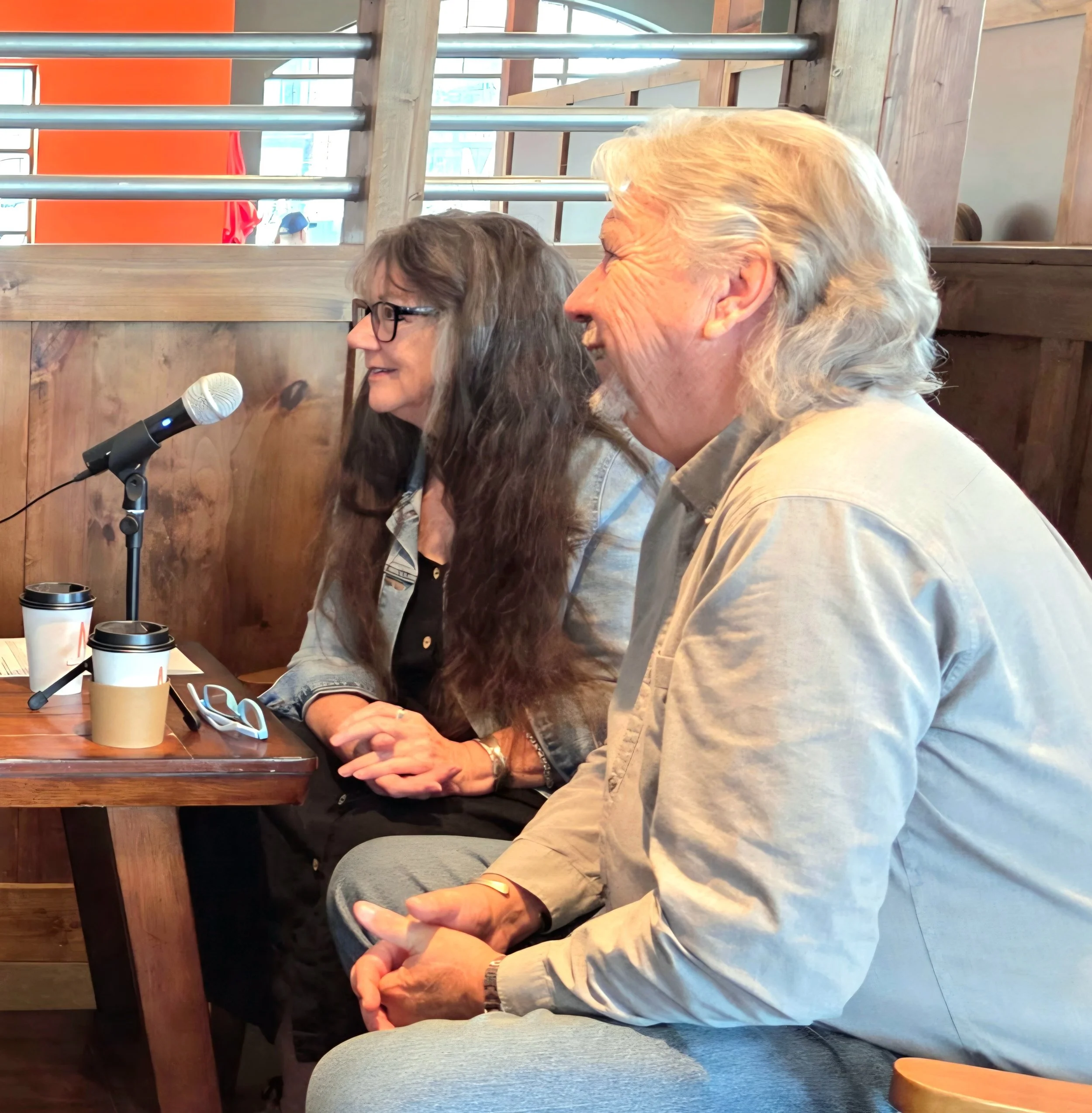
Chris Seifert (Left) and Don Seifert (Right) during the interview. Photo by Charmaine Maganito.
The Kaj Seifert Foundation For Aspiring Young Artists is a non-profit organization offering support for students in pursuit of the arts from Montana, Wyoming, and Idaho ages 10 through 17. Chris and Don Seifert established the foundation in the name of Kaj Seifert, their son, who was a musician and pilot from Bozeman until his death in 2020. In this interview, Mrs. and Mr. Seifert explain the background of Kaj’s story and their work with the foundation.
Q: What inspired you to begin a foundation in Kaj’s name?
A: (Chris) Kaj died during COVID, so we had an outdoor funeral at the Fairgrounds, and when we were talking to folks, it came [upon us] that we needed to do something. We had talked about setting up a different foundation, for which Kaj would have been the executive director, but that all went away really quickly. So, it was like, what did he love? What did he do? What gives us purpose?
(Don) It was sort of spontaneous. We had planned another type of foundation, and this one after he passed away naturally evolved into this. It was how we can keep his memory alive and do things he would have liked us to do.
Q: What was Kaj like?
A: (Don) He was witty, smart, sharp, and quirky. He was a great person, and he loved the arts. By that, I mean things like baseball, and not just the game… he liked the white lines on the green grass, the art of the double play; he liked the process. He used to fly from his house here to the one down in Florida, and he just loved… the art of doing it. He wasn’t a perfectionist by any means, but he loved the [small stuff].
(Chris) Kaj wasn’t picky about things in his work. He was also really open and had tons of friends, and each group of friends fulfilled a different need for him. It was fun afterwards to see these groups and see what he got from each of them.
(Don) He would have his music, baseball, or reading group of friends, and they didn’t seem to mix together until his funeral, when all these quirky people interacted. We realized how he lived in each little part of that world, and that was an eye-opener for me.
(Chris) For example, he had a friend who was getting a Master’s in economics. He knew nothing about economics, but his friend said she had nobody in her friend group to talk to about it, so he learned economics so they could talk. When she wrote her Master’s thesis, there was a dedication to Kaj. That’s what he would do; he’d find [a topic] and delve into it, become good at it, then move on to the next thing.
Q: What is the musical background of your family?
A: (Don) Music has always been a part of my life. I started taking guitar lessons when I was twelve or so from a neighbor… and that turned on my switch. My first gig was at 15 years old, and I think I got a free meal out of it. Then, in 1968, I met another guitar player, and I came down to Bozeman to go to college and he was down here too… so we started a band. We’re still best friends now. We also started another group called the Ringling Five, where we wrote all of our songs and material.
(Chris) One important thing is that Don learned to play guitar from a neighbor, and in our foundation [application], we require a mentor. It just started from that; it can be a neighbor, an aunt, and it doesn’t have to be a professional. We just want to help kids with the process… it’s really important for us that there’s a mentor involved. The other thing is flipping that switch. Kids need something to be passionate about, and if you can help them get a start at something new, maybe it’ll be the passion that grounds them, and that’s really important in their lives. Art is a [community] for kids to be in.
Q: How do you hope grantees will carry on Kaj’s legacy?
A: (Chris) I hope everyone with an instrument will be playing it 10 years from now, or teaching their kid about it.
(Don) Even if they’re a visual artist or a dancer or musician, if they don’t like participating, that’s fine. Hopefully, at some point, they’ll be sitting in a symphony and begin to appreciate the music and artistry more. I hope we can broaden their horizons so they can see the world in a different form. If they can participate in the art, that’s wonderful, but it’s not necessary. Just experiencing it and beginning to appreciate and understand the skill it takes to get to that level that they're watching… and beginning to appreciate the process.
(Chris) [I hope] they carry on and find their passion, put a sparkle in their eye, and flip the switch.
Q: What can members of the community do to support your cause?
A: (Chris) Money is always good. Our average grant is $1500 to $2000… so money is always helpful. Another thing is being aware of kids who need that step. Just like if teachers or neighbors or the minister or somebody looks at a kid and says there’s some potential here, or if a counselor says we need a [creative] outlet for a kid. Just having people spot kids that maybe we can help [supports the foundation].
(Don) The age that we try to stay within is 10 to 17. That’s a point in life when these young people are beginning to find their way in the world and figuring out who they are. We look at that and ask, ‘How can we help that process? How can we give them a voice?’
(Chris) Art gives another avenue for success, and doesn’t give kids the opportunity to judge themselves or take in the social [issues] that come. It provides a sense of worth, offsetting those social situations.
(Don) What helps is if artists put themselves out there and start to share [their work] to get some feedback to help them grow. In life, we need to put ourselves out there. If you begin to be more forward and public about your art, it builds confidence.
Q: Is there anything else we haven’t discussed that you would like readers to know?
A: (Chris) I think about the friends Kaj made from music. Through music, Kaj had this other family that became my family too.
(Don) Also, another thing we do is we had a bunch of guitar picks made with Kaj’s name on them, and we hide them when we go somewhere that we think Kaj would enjoy or that reminds us of him.
(Chris) For example, we were at the Country Music Hall of Fame in Nashville, and there are several Kaj picks tucked behind stages and auditoriums.
(Don) There are places around town here where he may have played or remind us of him, where we hide guitar picks. Somebody may never find them, or someone could in 20 years and ask, ‘What the heck is a Kaj pick?’ It’s our little way of having people say, ‘Oh! Look what I found!’ It’s that spark. That’s what it’s all about. I wouldn’t think of it as lighting a fire, but maybe it will. Someone might get inspired by seeing a guitar pick, who knows? It’s just a way for us to continue to remember him and put him out into the universe and see what comes back.
Kaj Seifert’s legacy will continue as his spirit lives through the blossoming artists whose pursuit of passion is made possible by the foundation. For interested readers and young artists, the website to learn more about their cause and access application information is kajseifertfoundation.org.
