
The History Behind Women’s History Month
By Elsa Nave and Audrey Woessner
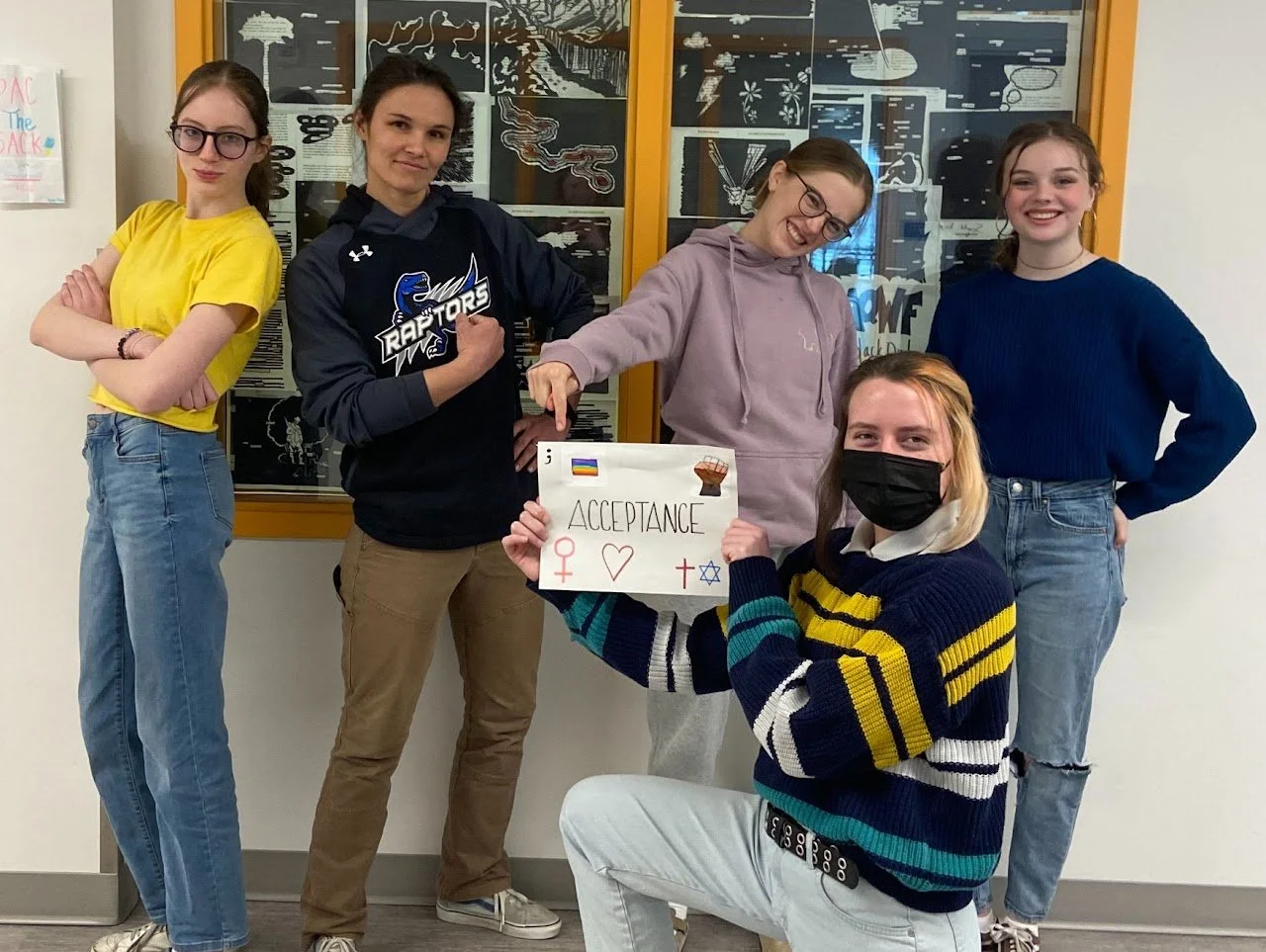
(Left to right, then down): Sophie Woodard, Felicia King, Grace Lux, May Fraser, Abigail Thomas.
Raptor Report file photo courtesy of Olivia Cooper.
Did you know that Women’s History Month used to be Women’s History Week?
Every March, communities in the US celebrate Women’s History Month, a time recognizing the achievements, struggles, and contributions of women while reflecting on the ongoing fight for equality.
This event dates back to the women's suffrage movement, although the movement's true roots remain unknown. Some stories claim the movement began with a strike by female textile workers in 1857, though many historians dispute that account. A clearer milestone came in 1909 when the Socialist Party of America designated February 28 as National Women's Day. This idea eventually spread internationally, leading to the worldwide observance of International Women's Day on March 8th.
The celebration of women's history in the US expanded in 1978, when educators in Santa Rosa, California, wished for more women's representation in the classroom, so they organized the first Women’s History Week. The effort moved nationwide, and in 1987, Congress officially designated March as Women's History Month.
Here in Bozeman, local organizers are marking the month with events that highlight women’s accomplishments and leadership. The Armory Hotel hosts the Women in Business Summit, organized by the Montana Chamber of Commerce. The two and a half day event has discussions, networking opportunities, and workshops. These are aimed at supporting women entrepreneurs.
At the Bozeman Public Library, the Women in Montana Project is highlighting the accomplishments of influential women in the state's history and inspiring people through the accomplishments of women in our state’s history.
Women have been making significant progress in business in the past several decades. In the 1970s, approximately 9% of business owners were female, but now the numbers are much more even, with 45% of them being women.
Still, challenges remain for many women in professional settings, and local business owner Medellee Antonioli has experienced some of these challenges firsthand.
Antonioli began working in bookstores at 17, and later moved into management positions in her early 20s. At times, she said, customers would question her authority.
Antonioli said. “People would ask to speak to the manager, and when I came out they’d say ‘No, I mean the real manager,’ usually expecting an older man.”
Those experiences influenced the way she approaches leadership today. Antonioli said she works to ensure the women she employs feel supported and confident in their roles.
“I wanted to make sure that they feel supported in their positions and make them feel allowed to maintain authority as well as being allowed to speak with the voice of authority,” she said.
For Antonioli, Women’s History Month provides an opportunity to reflect on both the progress women have made and the work that remains to be done.
Antonioli hopes younger women feel encouraged to pursue their goals, including starting their own businesses.
“Don’t be afraid,” she said. “If something goes wrong, that’s okay, but the biggest mistake you can make is never trying.”
As Women’s History Month continues throughout March, events in Bozeman aim to highlight the contributions of women past and present while encouraging future generations to pursue leadership and change.
Every day, women in this society face numerous challenges due to modern technology. Studies from Boston University’s College of Communication show that women are three times more affected by content. With the constant comparison of how you live your life, how your body looks, and how you act, many women on social media feel consistent pressure to create a “perfect image.”
As technology boomed in 2010-2015, we saw dramatic increases in trends of young women and girls with depression, anxiety, loneliness, self-harming thoughts, and suicide, which is directly correlated with the social media influence.
Due to the COVID-19 Pandemic in March of 2020, social media has been used as an unhealthy coping mechanism with loneliness for people all over the world.
Let's take a look at how the women had it in the past. Women of the past laid the foundations of success for baseball players today, for example. Maria Pepe was the woman who let girls play in the Little League of baseball today. Beginning in Williamsport, Pennsylvania, the Little League Baseball organization founded three leagues in 1939.
In 1950, Kathryn Johnston decided to try out for her local team by disguising herself as a boy. After she successfully got in, she revealed her gender to the coach, who shamed her, but there were no set rules against there being a girl on the team. The next year, however, the Little League Baseball team set a rule in place that stated, “Girls are not eligible under any conditions.” However, despite these rules, many girls played in Leagues in the 1950s-1970s under the discretion of the manager.
When Maria Pepe was suddenly kicked off the team by her fearful coach, she gained publicity through the media, which allowed her to join forces with the National Organization for Women and challenge Little League in a trial that dragged on for over two years!
Finally, in 1973, Maria Pepe won when Sylvia Pressler, a judge from New Jersey, voted in favor of their case, and there was an amendment set in place preventing gender discrimination in Little League Baseball. The next year, 30,000 women signed up for the Little Leagues across the country. Maria Pepe inspired millions of young athletes to this day and showed us how strong one voice can be.
Through the National Women’s Studies Association and many other groups, women have united all around the world to come together and face these problems head-on. The National Women’s Studies Association, or NWSA, promotes a world where all people can be loved equally, and modern society can be freed from all of the ideologies or structures that existed in the past in our country. They focus on promoting women in all forms and helping to demonstrate how we can change today’s society to be a better fit for all genders.
