
Greenwashing: Industry’s Dirty Tricks


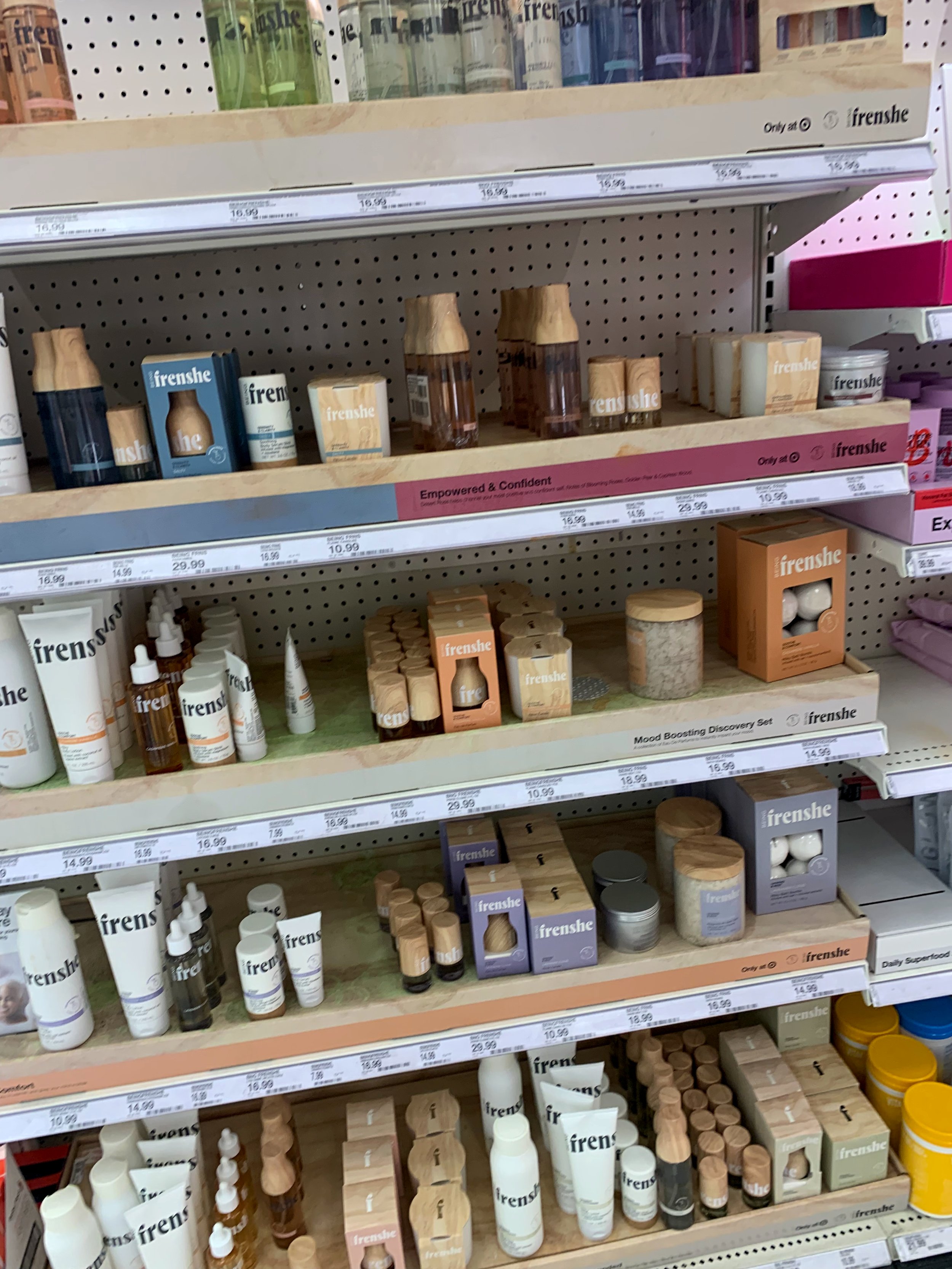
The cosmetics aisle at Target. Photo by Paisley Dailey.
When walking the aisles of a local grocery store, many consumers are drawn to products that claim “sustainability” or “eco-friendliness.” After all, it’s worth the extra dollar since it’s better for the environment–or is it? Many products will often advertise being good for the environment, cruelty-free, or recyclable. Sometimes this really is the case, and these products could be a better alternative to other unsustainable options. However, all too often, deceitful companies will falsely promote climate-friendly concepts to earn more profit, which can even be worse for the environment than typical products.
This practice has come to be called ‘greenwashing,’ the act of companies manipulating buyers for increased earnings. The term was first used in the late 1900s when hotels started to tell their residents to reuse towels to help the environment. However, they were actually trying to save themselves the extra laundry costs. Officially, the misinformation of their motivations was coined as greenwashing, a term combining the words green (often used to signify eco-friendliness) and whitewashing (intentionally hiding offensive truths).
Greenwashing can take many different forms in a wide variety of products, including food, drinks, energy sources, vehicles, and just about anything you can think of. It’s become more widely used as scientists have been taking more action to protect the environment, making it a large draw for consumers. Companies utilizing greenwashing were not eco-friendly to start, and opted to do a rebrand instead of making any beneficial changes. This has been an issue for several major businesses such as H&M, Coca-Cola, and Walmart.
The tactics mentioned not only fail to help the environment, but they can also be detrimental. Companies might create a product that is less harmful in one aspect, but replace it with something that is significantly worse for the environment. They can also advertise improvements with a very minimal impact on the environment, such as saying products are “100% recyclable.” Even if such claims are truthful, recycling factories produce a large amount of carbon.
Companies can also advertise that they will make donations for every product bought, when they have no legal obligation to do this, and it likely would have very little impact either way. This can be harmful because they can charge a higher price for a cheaper product.
In addition to all of the negative consequences environmentally, this can even end up being worse for the company itself, as they can often get sued and lose business. They can also have struggles with employees, as they are much more likely to leave their position if they see their company is greenwashing.
Common ways greenwashing can appear are through vague labels like “eco-friendly” or “100% natural”, with no description as to what the companies actually do, nor evidence that their claims are factual. Often, companies utilize packaging that looks more eco-friendly but has plastic on the inside, or even just make the packaging green. They could also make a real change to their product that turns out to be worse for the environment.
A significant company that has greenwashed with packaging claims on multiple occasions is Starbucks. Upon the release of a new lid design without a straw, Starbucks claimed that this alteration would allegedly reduce their impact, but in reality, this lid used more plastic than the old one and the straw together. The company has also been accused of false advertising in saying they are “100% ethically sourced,” while using suppliers that have child labor, abuse, and human rights violations, according to NBC News.
Another example of greenwashing was when Volkswagen launched a supposedly more environmentally friendly car. These claims were false, as the car actually produced significant quantities of nitrogen oxides, up to 40 times more than is regulated in many of their models from 2009 to 2016. These gases can have serious health consequences, damage the ozone layer, and cause smog and acid rain.
One of Gallatin High’s science teachers, Steven Riccio, is very aware that products can often be deceiving. He expects greenwashing could also have a cultural impact, since so many things are labeled eco-friendly or natural that it loses its meaning. The awareness that some of these brands are lying often leads to the mentality that they all might as well be, and many people don’t even really care what they buy as a result.
These instances demonstrate why, as consumers, it's important to know how to spot the differences between trustworthy and counterfeit products or companies. Though it can be a challenge to tell which brands are really better for the environment, one sign is if they have a specific certification or license. These certifications provide much more credibility than a broad label. There is a wide variety of licenses companies can apply for in many areas, including food, manufacturing, and energy sources.
In recent years, environmental protection efforts have significantly ramped up, but not everyone has been consistently on the same page. While greenwashing isn’t likely to go away anytime soon, the effects can be reduced if consumers like you know what to look for. It’s important to be mindful that things aren’t always what they appear to be, but that doesn’t mean giving up on eco-friendly options is the only solution.
